Technique

Knots & rigs

Every knot below gets wet before it's tightened — friction heat is what breaks a knot, not the fish. Cinch slowly, then pull hard to test before you cast.

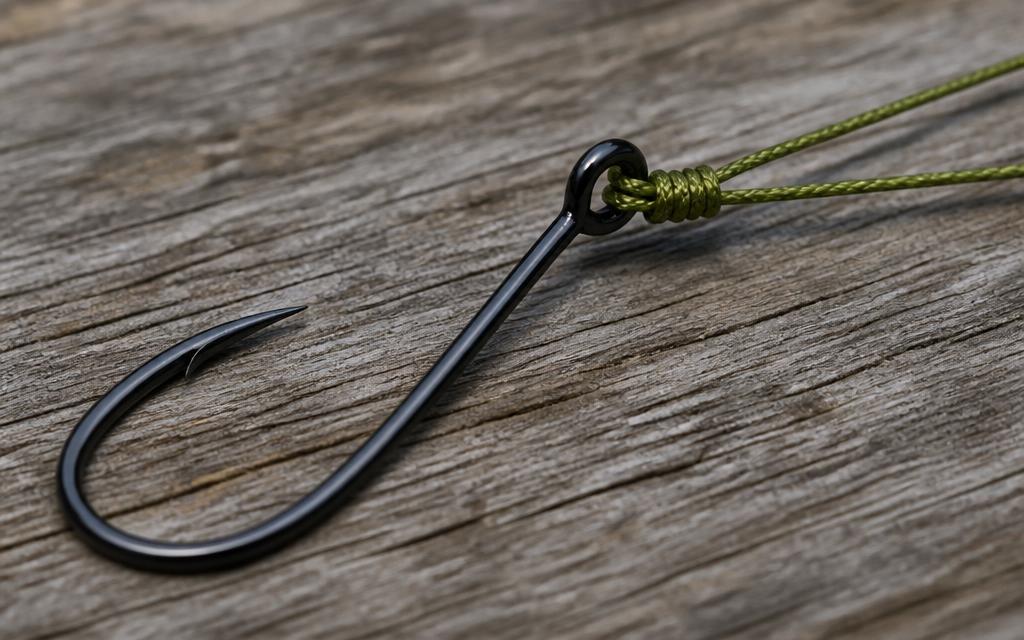
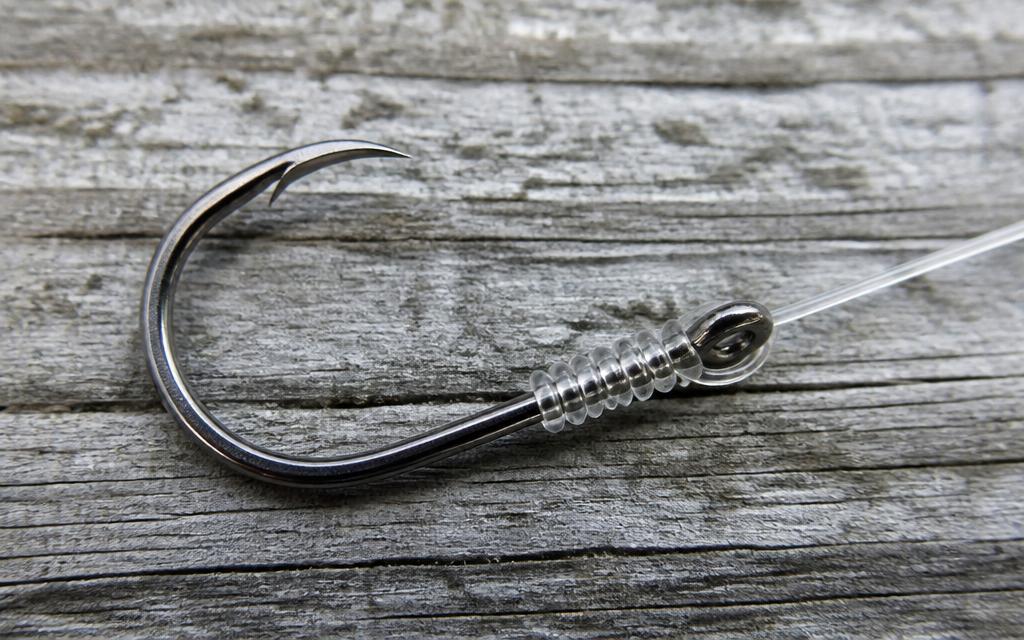
Improved Clinch fishing knot tied and cinched

Improved Clinch

Tying mono or fluoro straight to a hook, swivel or lure. The everyday knot.

~90% line strength up to 20 lb; weak in heavy braid.

Line type
4–20 lb monofilament or fluorocarbon (skip it on braid)
Hook / terminal
Baitholder, Aberdeen, kahle hooks, swivels and small lures
Target fish
Bluegill, crappie, channel catfish, pond bass

Step by step

  1. 1Pass 6 in of tag end through the hook eye.
  2. 2Twist the tag around the standing line 5–7 times (5 turns for heavy line, 7 for light).
  3. 3Push the tag back through the small loop at the eye, then through the big loop you just formed.
  4. 4Wet the knot with saliva and pull the standing line slowly to seat the coils.
  5. 5Trim the tag to 1/8 in.
Palomar fishing knot tied and cinched

Palomar

The strongest, simplest connection for braid to hooks and jigheads.

Near 100% — the go-to braid knot.

Line type
10–65 lb braid (also fine on mono/fluoro up to 30 lb)
Hook / terminal
Jigheads, EWG worm hooks, treble-hooked lures, swivels
Target fish
Largemouth bass, speckled trout, redfish, hybrid stripers

Step by step

  1. 1Double 8 in of line and pass the loop through the hook eye.
  2. 2Tie a loose overhand knot with the doubled line, keeping the hook hanging below.
  3. 3Pass the loop completely over the hook.
  4. 4Wet it, then pull both the standing line and tag together to cinch.
  5. 5Trim close.
FG Knot fishing knot tied and cinched

FG Knot

Braid mainline to fluorocarbon leader. Thin enough to pass through the guides on a cast.

Highest leader-knot strength; essential for inshore and offshore casting.

Line type
15–80 lb braid to a 20–100 lb fluorocarbon leader
Hook / terminal
None — line-to-line only, ahead of any terminal knot
Target fish
Redfish, speckled trout, flounder, red snapper, sheepshead

Step by step

  1. 1Hold the braid under tension (rod tip or teeth) and lay the leader across it.
  2. 2Weave the braid over-and-under the leader 18–20 alternating times.
  3. 3Lock the weave with two half hitches around the leader only.
  4. 4Add 4–6 half hitches around both lines, then a finishing double half hitch.
  5. 5Trim the leader tag flush and the braid tag long enough not to slip.
Uni Knot / Double Uni fishing knot tied and cinched

Uni Knot / Double Uni

Single Uni for terminal tackle; double Uni joins two lines when you don't want to tie an FG.

~85–90%; easy to tie on a rocking boat.

Line type
4–50 lb mono or fluoro; double Uni for braid-to-fluoro leaders
Hook / terminal
Circle, kahle, baitholder hooks and swivels
Target fish
Catfish, crappie, bream, redfish on bait rigs

Step by step

  1. 1Run the line through the eye and double back to form a loop alongside the standing line.
  2. 2Wrap the tag through that loop and around both lines 5–6 times.
  3. 3Moisten and pull the tag to close the coils, then slide the knot down to the eye.
  4. 4For a double Uni, tie one Uni on each line facing the other and pull the standing lines apart.
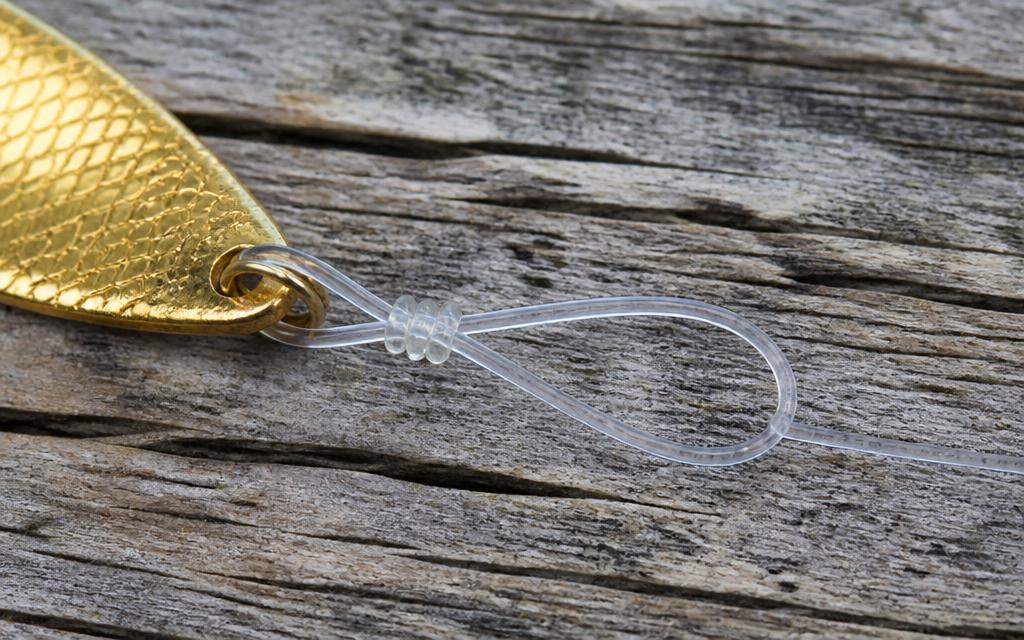
Loop Knot (Non-Slip Mono) fishing knot tied and cinched

Loop Knot (Non-Slip Mono)

Gives jigs, plugs and topwaters free movement — deadly on speckled trout and redfish.

~85%; the action gain is worth it on artificials.

Line type
15–40 lb fluorocarbon or mono leader
Hook / terminal
Jigheads, hard plugs (MirrOlure), topwaters, gold spoons
Target fish
Speckled trout, redfish, largemouth bass on topwater

Step by step

  1. 1Tie a loose overhand knot 6 in from the tag and pass the tag through the lure eye.
  2. 2Run the tag back through the overhand knot.
  3. 3Wrap the tag around the standing line 4–5 times, then back through the overhand knot again.
  4. 4Wet and pull the standing line to close, leaving a 1/4 in loop.
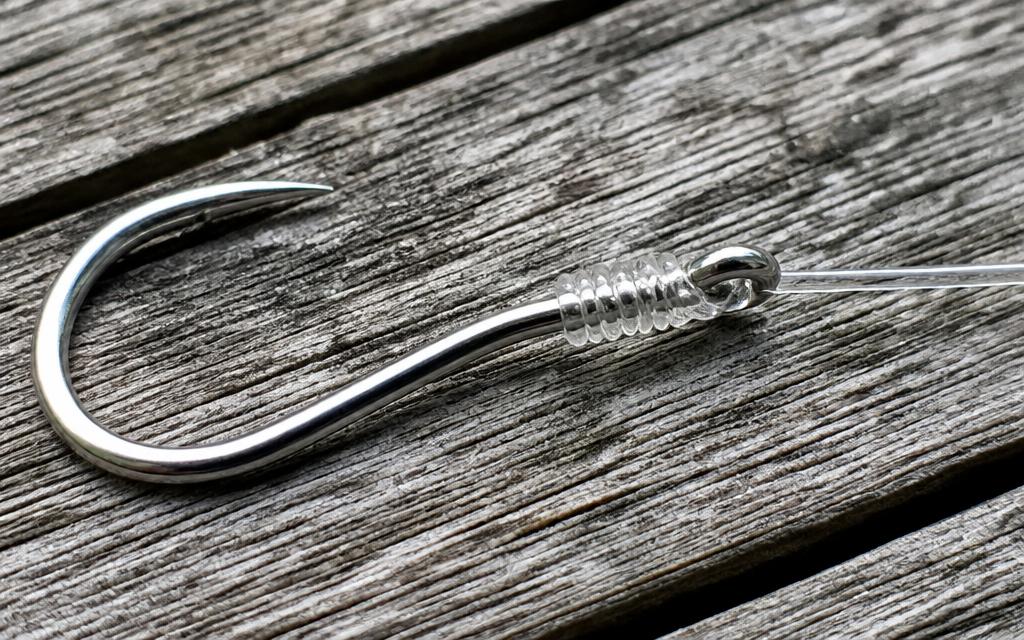
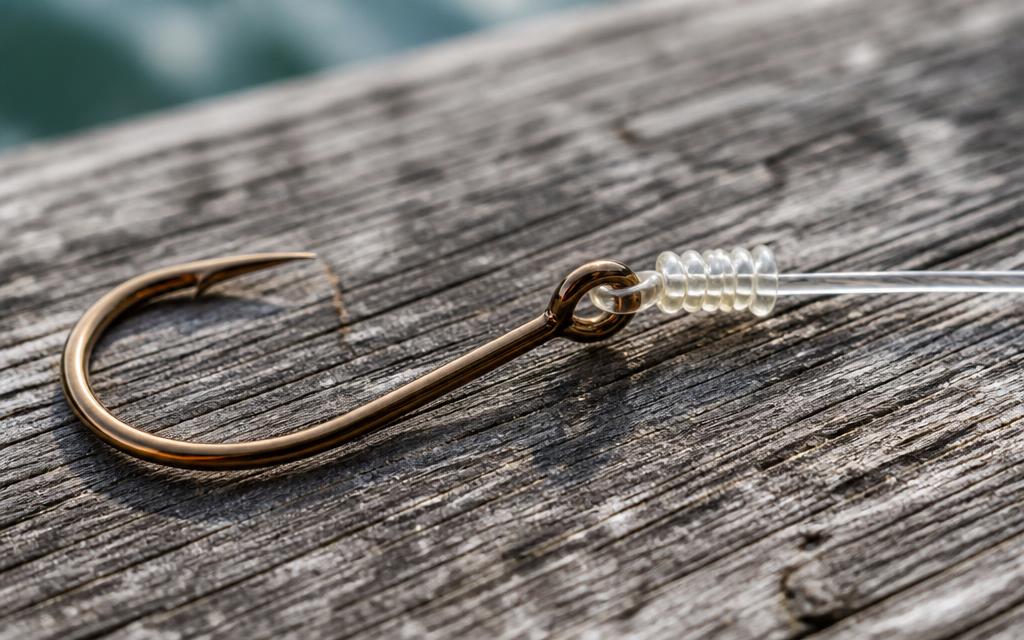
Snell Knot fishing knot tied and cinched

Snell Knot

Circle hooks for catfish and bull reds — keeps the pull in line with the hook shank.

Very high; improves circle-hook hookup ratio.

Line type
20–60 lb mono or fluorocarbon leader
Hook / terminal
Octopus and circle hooks, 4/0–9/0, straight or turned-up eye
Target fish
Blue and channel catfish, bull redfish, red snapper

Step by step

  1. 1Pass the tag through the hook eye and lay it along the shank.
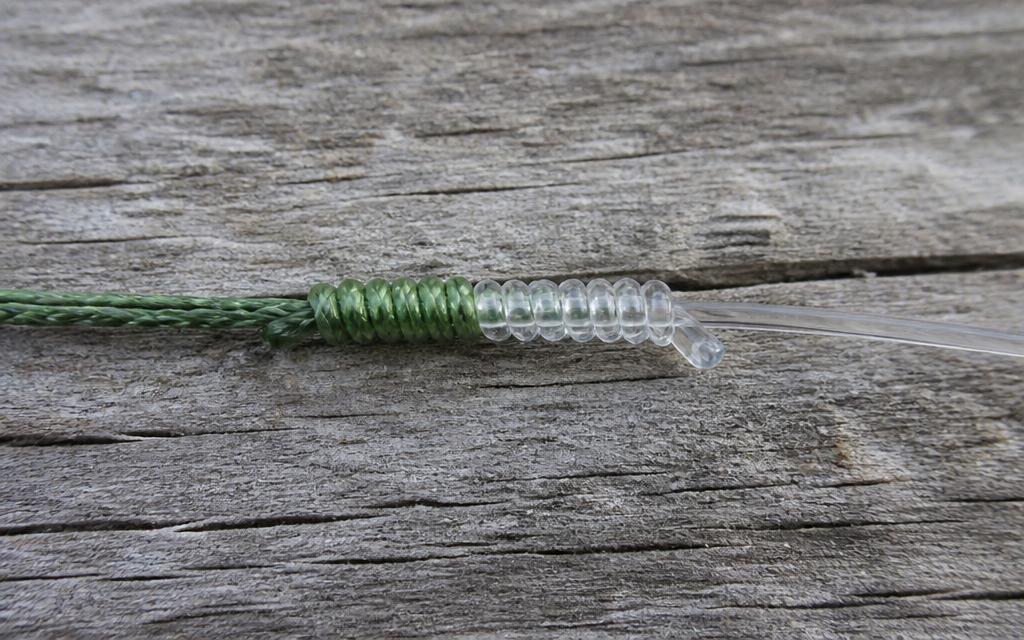
  2. 2Form a loop and wrap it around the shank and line 7–8 times toward the point.
  3. 3Hold the wraps, pull the standing line to tighten them up against the eye.
  4. 4Seat wet and trim.

The six rigs that cover both coasts

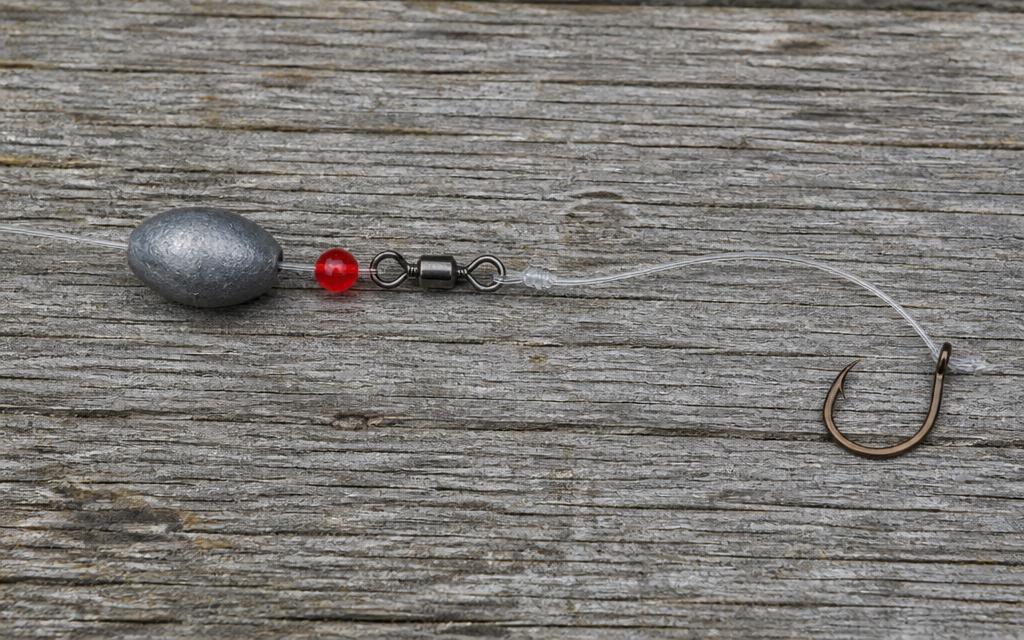
Carolina / fish-finder rig assembled and laid out

Carolina / fish-finder rig

Sliding sinker, bead, swivel, then an 18–24 in leader to the hook.

Catfish in the Tallapoosa, flounder on the sand, and surf fishing at Dauphin Island.

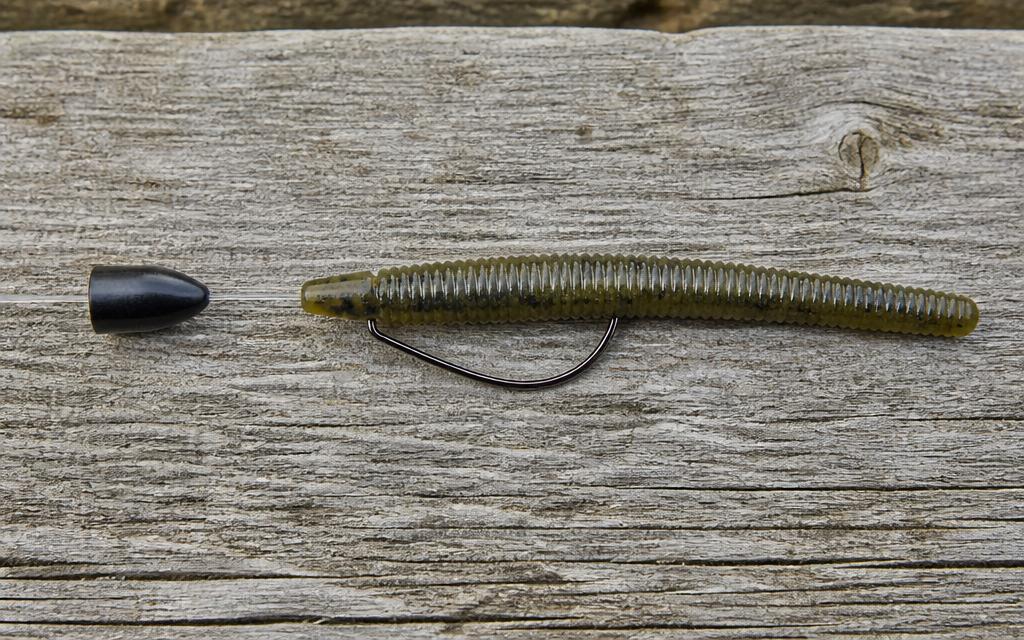
Texas rig assembled and laid out

Texas rig

Bullet weight pegged (or free) above a worm hook buried in a soft plastic.

Weedless bass fishing in laydowns and grass at Lake Martin.

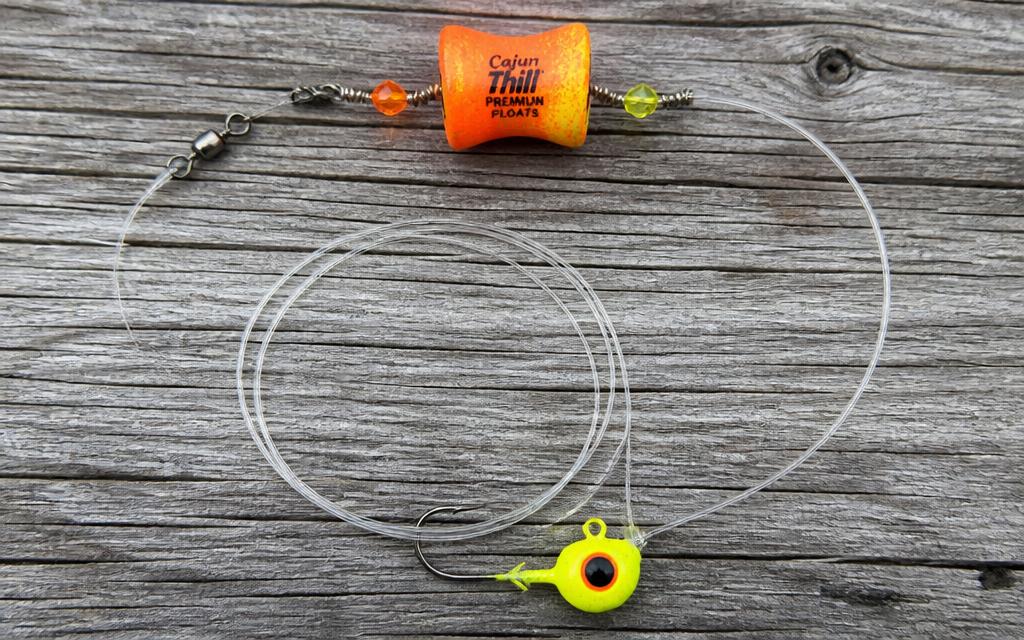
Popping cork rig assembled and laid out

Popping cork rig

Concave float, 18–24 in of fluoro leader, live shrimp or a jighead below.

The number-one inshore rig for speckled trout and redfish over grass.

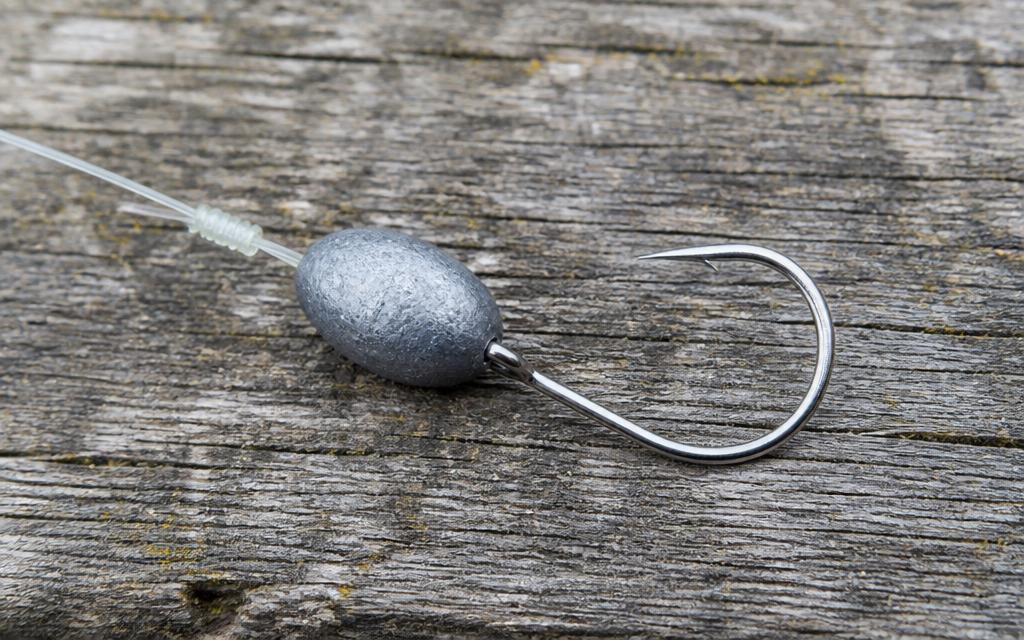
Knocker rig assembled and laid out

Knocker rig

Egg sinker slides freely down to the hook eye — no swivel.

Sheepshead on pilings and snapper on reefs; pulls fish off structure fast.

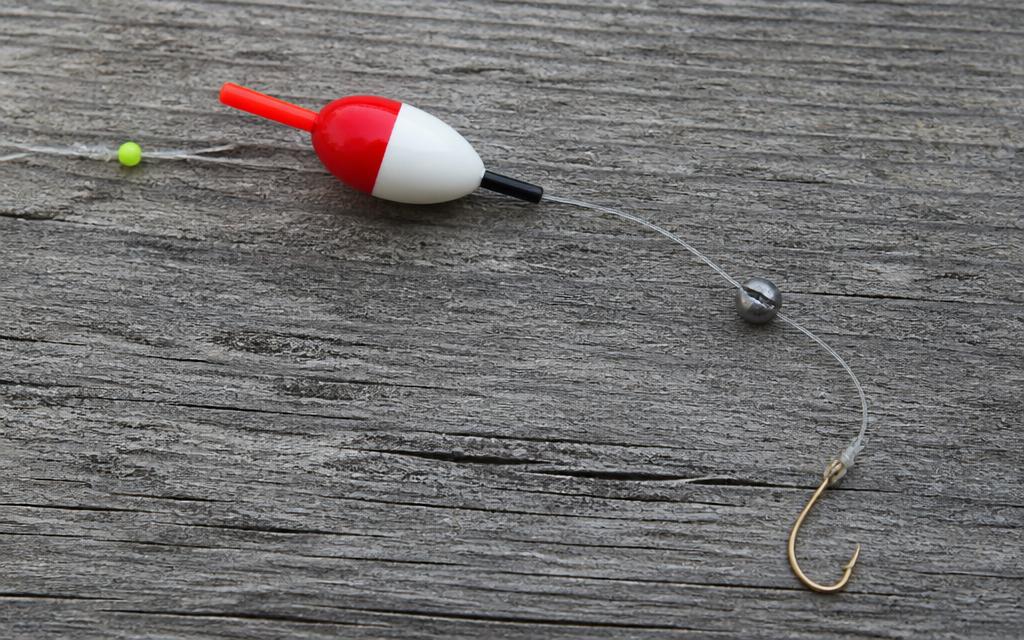
Slip-bobber rig assembled and laid out

Slip-bobber rig

Bobber stop, bead, slip float, split shot, hook — sets depth precisely.

Crappie over brush piles and bream on beds.

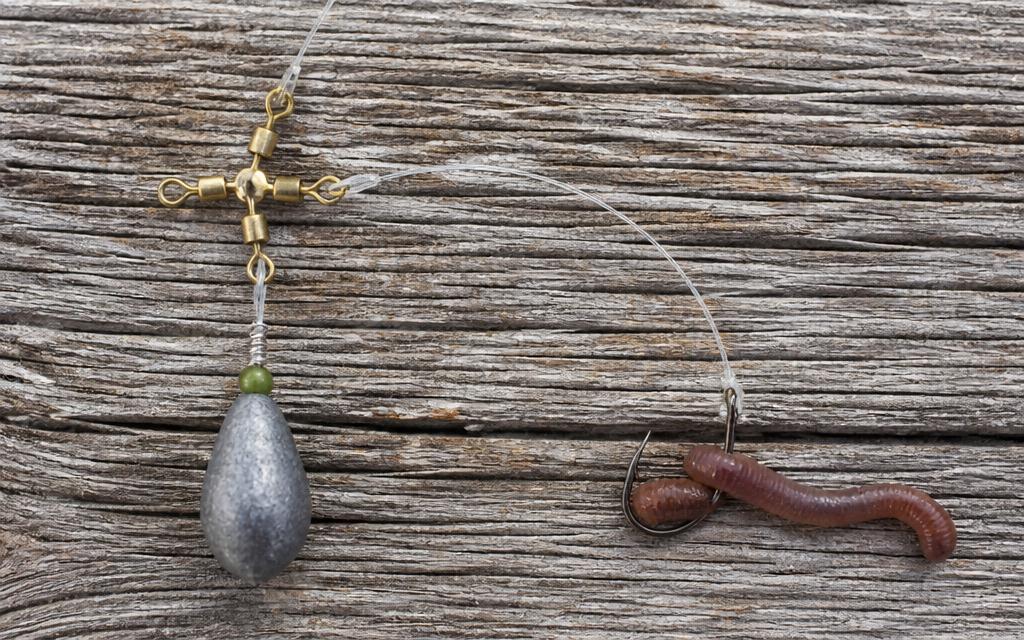
Three-way rig assembled and laid out

Three-way rig

Three-way swivel with a short drop line to the weight and a longer leader to the bait.

Tailrace stripers below Yates and Thurlow in heavy current.